Candy Burst Legends: Stage Walkthroughs & Mechanics
Most advice for this genre tells you to make big clears. That is true and useless on its own, because it never says how big, or what you give up while waiting for one. This candy burst legends Android strategy puts numbers on it: what each cluster size produces, how the score behaves as the group grows, and the point past which waiting costs more than it earns.
Assessed here on four things only: what a cluster of each size creates, how obstacles interrupt one, why the bottom row is worth more than the top, and when a turn spent waiting is a turn spent well.
- Board
- Fixed grid
- Clear by
- Tapping
- Limit
- Moves
- Time pressure
- None
01Size
Large clusters, and why size beats tidiness
A group of five and a group of nine both clear. Only one of them leaves you anything.
On a tap-to-clear board the immediate reward is the same shape regardless of size: the group disappears and the score goes up. The difference is entirely in what happens next. A group of five removes five cells, so five pieces fall in and a handful of neighbours change. A group of nine removes nine cells, and because they are usually stacked rather than spread, the columns above them shift two or three rows — which is many more new adjacencies, and often a follow-on clear you did not pay for.
The second difference is that most stages in this format only produce special pieces above a size threshold. Below it you get points; above it you get a tool. Clearing a group of six repeatedly while a group of nine sits one tap away is the most common way to reach the last five moves with nothing on the board to work with.
None of which means always waiting. A group grows only if the pieces around it survive, and every turn you spend elsewhere risks breaking it up. The judgement is in the table further down.
02Obstacles
Bubble tiles and moving targets
Two obstacles define the hard stages in this format, and they fail in opposite ways.
- Bubble tiles sit in the group but do not belong to itA bubble occupies a cell inside what looks like one large cluster and splits it into two smaller ones, neither of which may reach the threshold. They pop when a clear happens next to them, which means the cheapest route is a small adjacent clear first, then the large one afterwards — two taps rather than one, but the second is worth several times the first.
- Moving targets change the board between your turnsAnything that shifts position after each move breaks the one guarantee this genre normally gives you, which is that the board waits. Plan for where the target will be, not where it is, and prefer clears that constrain its route over clears that score well.
- Stacked obstacles double the real objectiveTwo layers on the same cell means the same cell has to be cleared twice while the on-screen counter shows one. Count layers before the first move; a board that looks comfortably inside your move budget can be a long way outside it.
- Edge obstacles are worse than central onesA blocker in the middle is reachable from four directions. A blocker in a narrow edge column is reachable from one, and only when that column happens to move. Deal with edge obstacles while moves are still cheap.
03Direction
Working upward from the bottom row
Refill is vertical. New pieces enter at the top of a column and drop straight down; nothing moves sideways on its own. Every piece of advice on this page is a consequence of that sentence.
Clear low and the whole column above shifts down, meets neighbours it has never met, and frequently produces a second clear at no cost. Clear high and the gap fills from off-screen, where nothing can already match. It is the same tap with wildly different value, and it is the single largest source of wasted turns in the genre.
Depth beats width for the same reason. Eight cells removed from two columns disturb more of the board than eight removed along one row, because the number of pieces forced to move is what generates new groups. Given two clears that look equally good, take the narrower and lower one.
04Numbers
What each cluster size produces
The last column is the one that decides play: whether a group is worth protecting for another turn, or whether taking it now is correct.
| Cluster size | What it creates | How the score behaves | Worth waiting for? |
|---|---|---|---|
| Below the threshold | Nothing; the tap does not register | No change | Not a choice |
| Just above it | A plain clear | Rises with the count | No; take it and move on |
| Roughly double | A plain clear, plus a deep refill | Rises faster than the count | Usually, if one turn away |
| Special threshold | A special piece | Rises sharply | Yes, up to two turns |
| Well past it | A stronger special | Rises sharply again | Only if the group is stable |
A description of how cluster scoring behaves in this format. Exact thresholds and score values differ between titles; the in-game help screen is authoritative for any particular one.
05Practice
Six things to try in your next run
One stage each. None of them needs a purchase, an account or a connection.
- Before the first tap, name the largest group on screen and the second largest. Play only those two for the whole board.
- Take a group of eight in the bottom two rows over a group of twelve in the top two, twice, and compare what falls afterwards.
- Deliberately pop a bubble with a small clear first, then take the large group it was splitting.
- Play one stage without ever using a special, then replay it spending every one. The gap is the honest measure of what they are worth.
- At the halfway mark, divide what the objective still needs by the moves left. Note the number and see whether it predicted the result.
- Play one board with the sound off. Clear audio is designed to feel rewarding whether or not the tap was good.
06On paper
The table, printed
The site is free and stays free. What it cannot be is a card beside the phone at the moment you are deciding whether to wait a turn, which is exactly when the table is useful.
The Cluster Size Table
Twelve pages, folded to sit next to a handset, and considerably more detailed than the version above — a web page has room for five rows, a booklet has room for the reasoning behind each.
- The full size table with worked examples, including the two cases where waiting is wrong.
- A bubble page: how a single blocker splits one useful group into two useless ones, drawn.
- Depth against width, traced through three turns so the compounding is visible.
- A move-budget card, printed large enough to read at arm’s length.
- Five practice boards with space to record what actually happened.
Order it by email Terms of the order
One item sold by a private individual, not a shop. This domain has no checkout, no payment page and collects no card details anywhere: you write, Brandon Stewart replies with transfer details, and the file follows once the transfer arrives. No sales tax is added and no invoice from a registered business is issued. If it does not arrive, or arrives and will not open, say so and the payment goes back in full.
07Store
Where a board like this sits on Google Play
Everything above describes a format rather than one app. App-specific facts live on a store page, so here is one with its labels exactly as the store shows them.

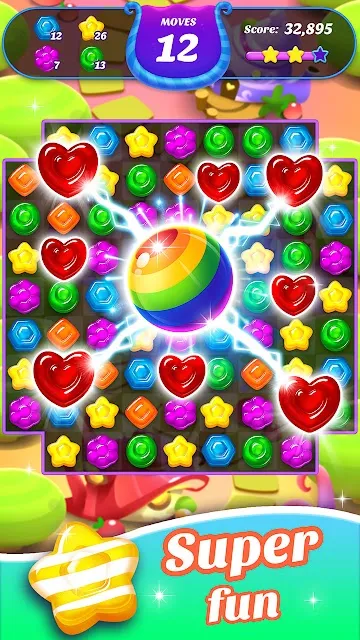
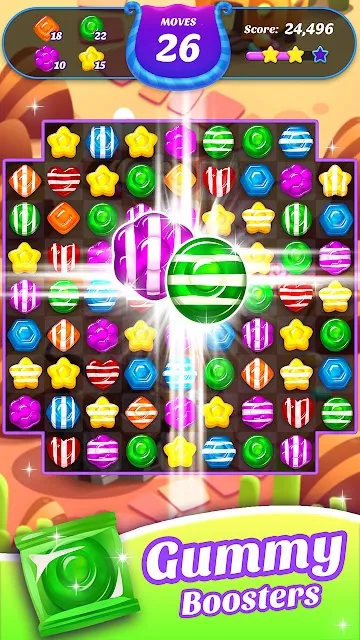
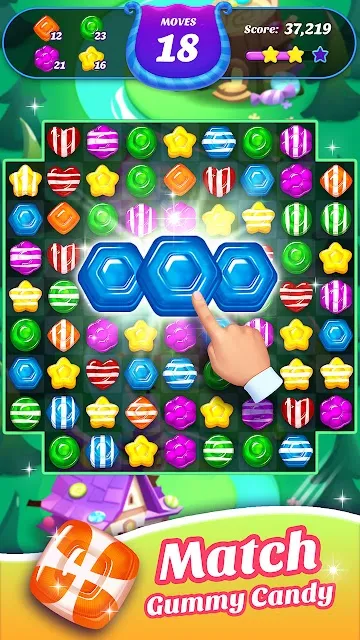
Gummy Candy Blast — Fun Match 3, by Gamepromo Entertainment
Open the listing on Google Play
Nothing is downloaded or installed from this site. Price, taxes and any fees appear on Google Play at the next step, and the date above records when these labels were last read from here.
Write to us
[email protected]Email is the only channel here. No forms, no newsletter and no data collection anywhere on this site — you write, and the answer goes back to the address you used.